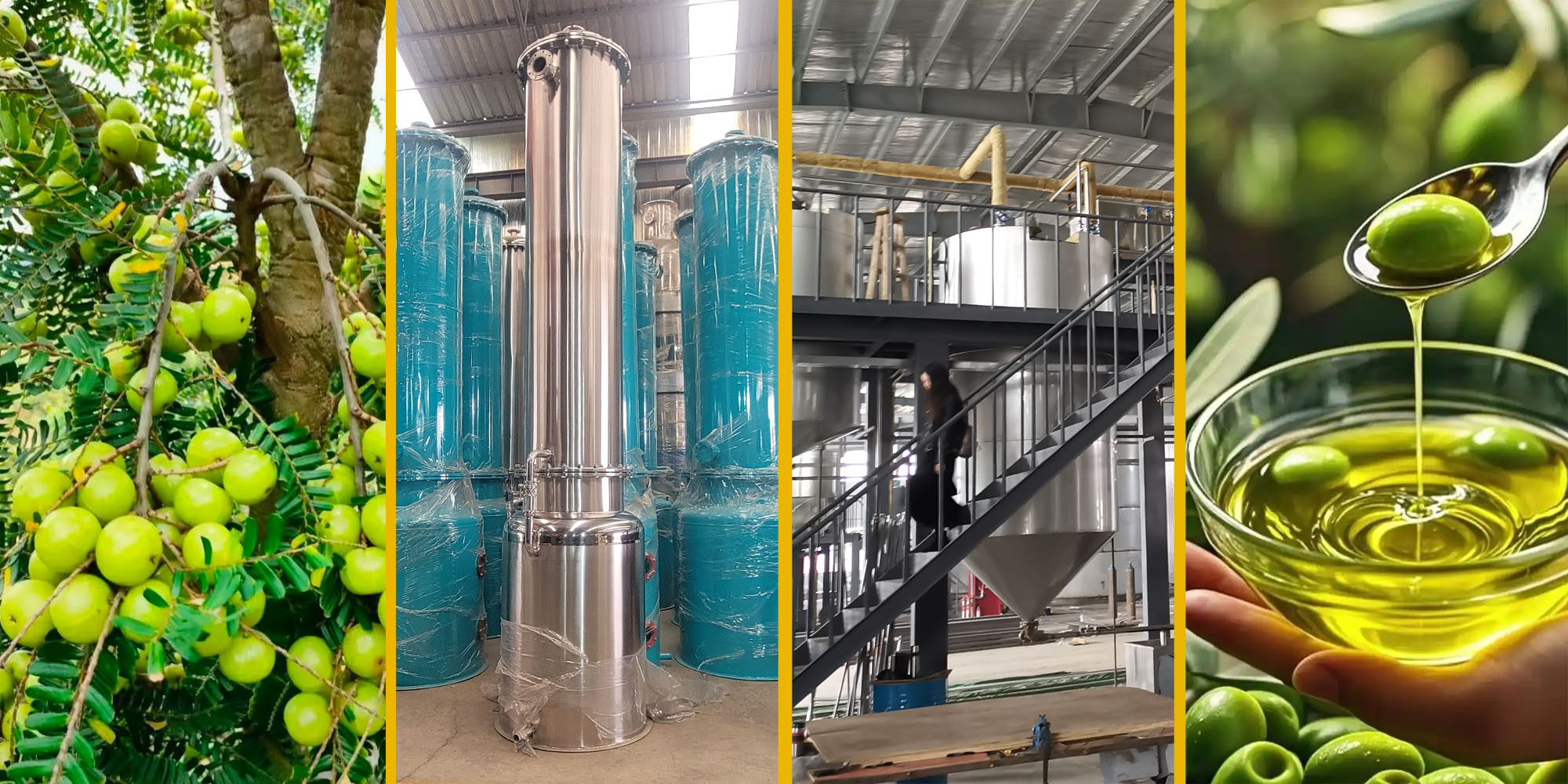
Olive oil production line

Olive oil is highly favored in the global market due to its outstanding nutritional value and unique flavor, with demand showing a steady growth trend. This olive oil production line project aims to build an advanced, efficient, stable and environmentally friendly production chain, produce high-quality olive oil products, meet the ever-expanding market demand, and enhance the enterprise's market share and competitiveness in the oil and fat industry.

封面图片
Raw material pretreatment
 
  • Screening: Strictly screen the purchased olives to remove rotten, shrivelled and pest-infested fruits, so as to ensure the quality of raw materials. Equipment such as vibrating screens and rotary screens can be adopted for preliminary screening according to the size and shape of olives, followed by manual sorting to further eliminate substandard fruits.
    Cleaning: Wash away impurities such as soil, dust and pesticide residues on the surface of olives by using spray cleaners or bubble cleaners. The cleaning water shall be filtered and purified before recycling, so as to save water and reduce wastewater discharge.
    Crushing: Use a crusher to break the cleaned olives into pieces with a diameter of about 3–5 mm. During the crushing process, the force should be properly controlled to avoid excessive crushing that causes the fruit stones to crack and affects the oil quality.
    Kneading and Mixing: The crushed olive pieces are fed into a kneading mixer and processed at an appropriate temperature (generally 25–30℃) for about 30–60 minutes. Through kneading and mixing, the oil in the cells is fully released and forms oil droplets.
封面图片
Initial oil extraction
 
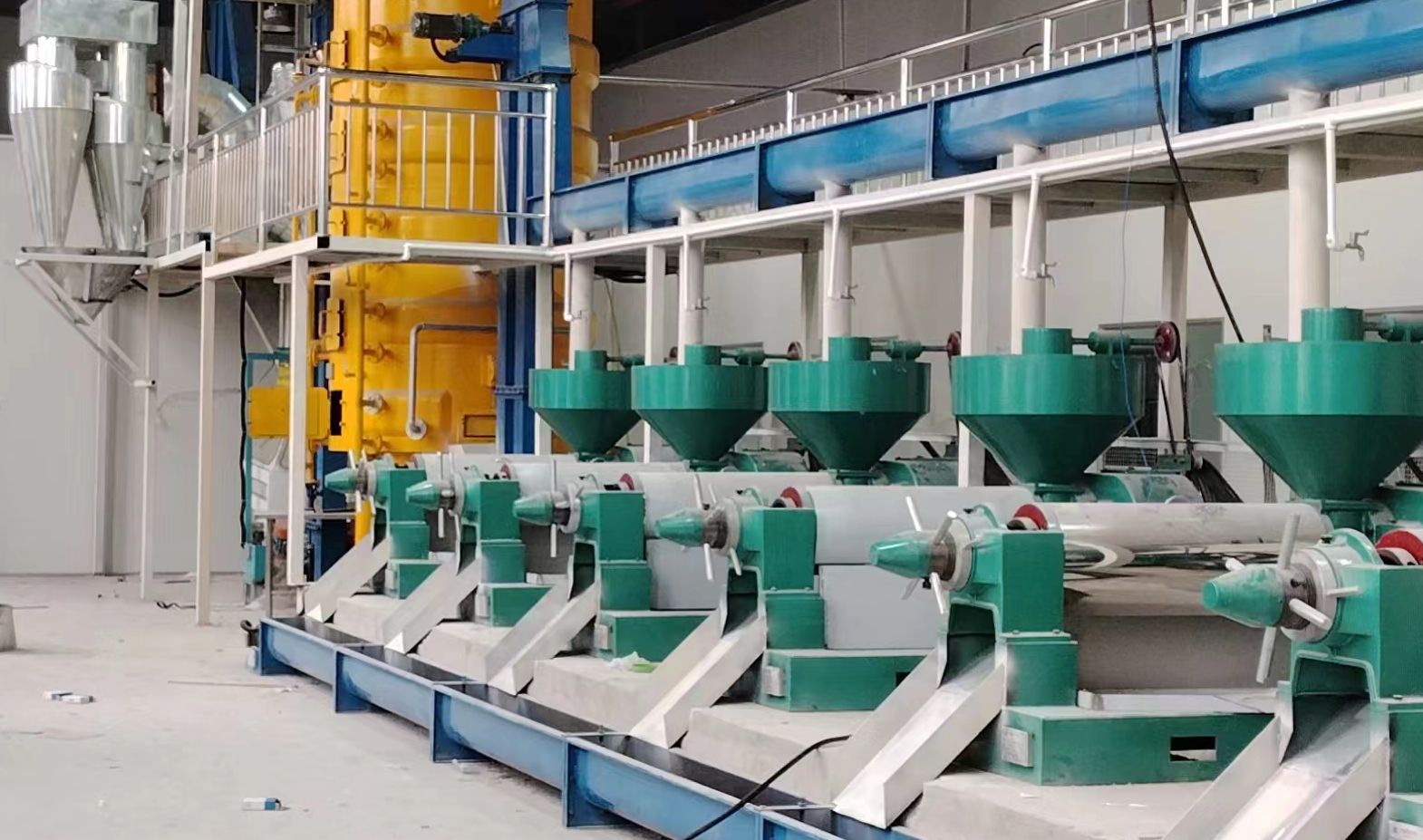
  • Pressing: Adopt the physical cold-pressing method and feed the kneaded materials into a screw press or a hydraulic press. The screw press drives the materials forward inside the pressing chamber through the rotation of the screw shaft. As the space of the pressing chamber gradually narrows, the pressure increases continuously, generally reaching 15–25 MPa, squeezing the oil out of the materials. In contrast, the hydraulic press exerts pressure on the materials by means of liquid pressure to achieve oil separation. During the pressing process, the temperature should be controlled below 30℃ to maximize the retention of the nutritional components and natural flavor of olive oil.
    Separation: The pressed mixture (containing oil, water, pulp residues, etc.) is separated by a centrifugal separator. Under the action of centrifugal force generated by high-speed rotation, the pulp residues and water with higher density are thrown to the outer side, while the olive oil with lower density accumulates in the central area, thus realizing the preliminary separation of oil, water and residues.
封面图片
Treatment of virgin oil
 
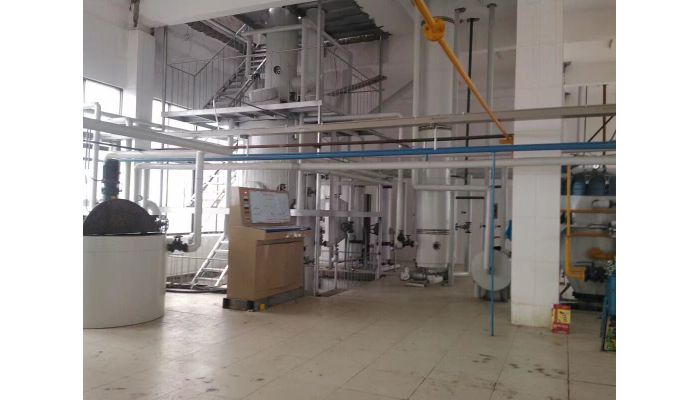
  • Sedimentation Separation: The initially pressed olive oil after preliminary separation is transferred to a sedimentation tank and left to stand for a certain period of time (usually 12–24 hours). This allows the fine impurities in the oil to settle at the bottom under the action of gravity, further improving the clarity of the oil.
    Filtration: The olive oil that has undergone sedimentation separation is then passed through filtration equipment, such as plate-and-frame filters and bag filters, to remove residual fine impurities, resulting in clear virgin olive oil. According to product quality requirements, filter media with different precision levels can be selected to ensure that the filtered olive oil meets the corresponding quality standards.
Oil refining
(For olive oil products that need refining)
  • Degumming
    1
    Colloidal impurities such as phospholipids are aggregated into large particles, and then separated by a centrifuge to obtain degummed oil.
  • Deacidification
    2
    Lye neutralizes free fatty acids to form soapstock. After the reaction is completed, the soapstock is separated by a centrifuge to reduce the acid value.
  • Washing, Drying
    3
    Separate the aqueous phase and the oil phase by centrifugal equipment to obtain water-washed oil, and repeated water washing can be conducted to ensure the effect.
  • Decolorization
    4
    The adsorbent is fully contacted with the oil to adsorb impurities, and then the adsorbent and the oil are separated by a filter to obtain decolorized oil.
  • Deodorization
    5
    The deodorized oil is cooled to 40–50℃ in a cooler to obtain refined olive oil.
联系我们

工作时间:周一至周五 9:00-18:00

Contact:Miss Li

Mobile:15515166685

Email:maoqianlong2002@163.com

底部导航
Our company specializes in the R&D, production and service of oil pressing machinery, and is a core service provider in the field of oil production equipment. We deeply focus on the processing needs of vegetable and animal oils, and have built a diversified product system covering screw oil presses, low-temperature cold pressing equipment, negative-pressure melting equipment and palm fruit-specific production lines. We also provide full-process supporting equipment for pretreatment, refining and packaging, which is suitable for all scenarios from family workshops to large-scale factories.
Baojin Intelligent Refining Equipment Copyright   Technical Support:YouDian Software