
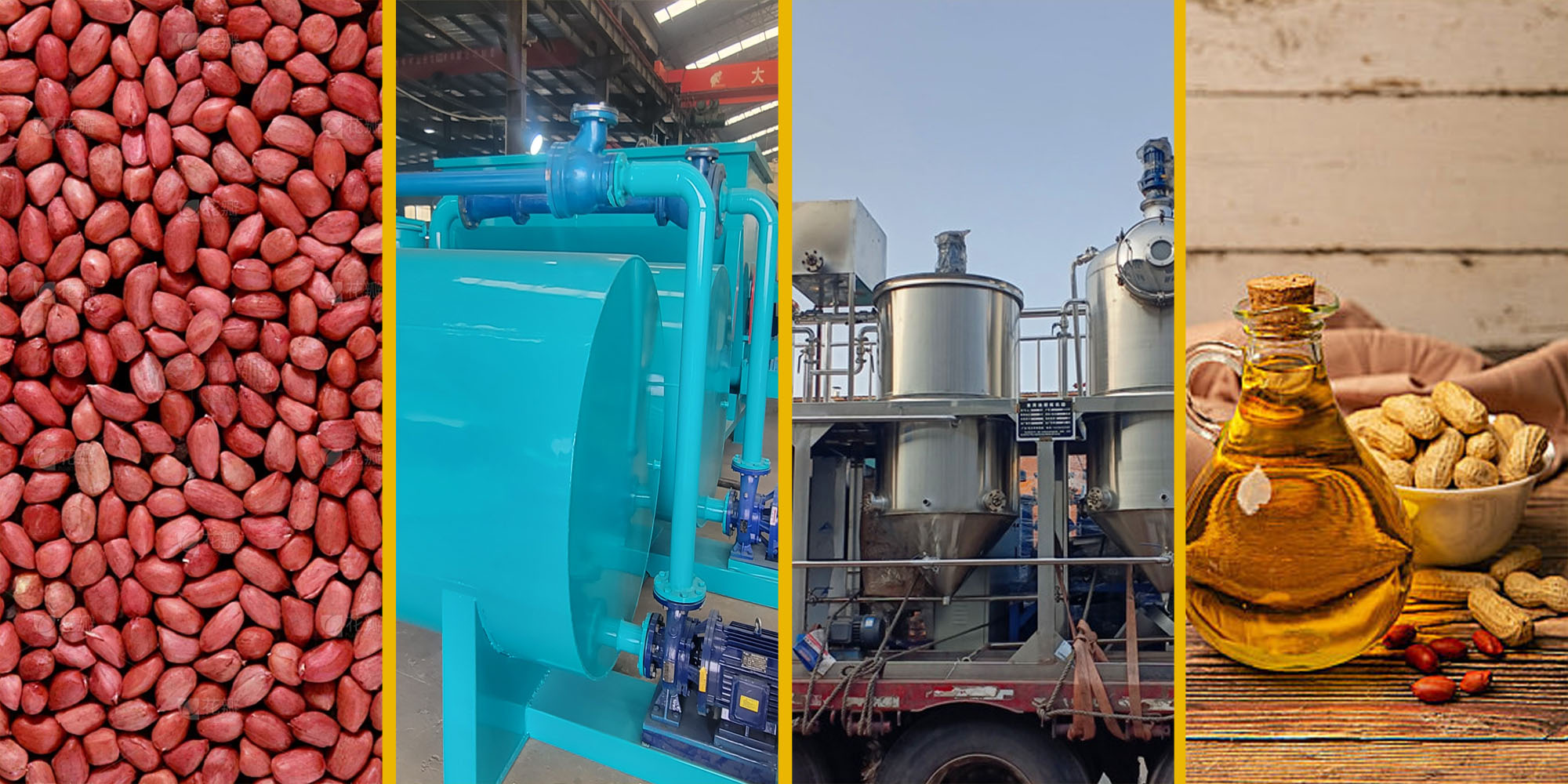
Through a vibrating screen, large - sized impurities are screened out according to the difference in particle size. A specific gravity stone - removing machine is used to separate heavier impurities such as stones based on the difference in density. A magnetic separator is employed to remove metal impurities by magnetic adsorption.
Peanut shells are hard in texture. The shells need to be broken by a shelling machine, and then methods such as air separation, screening or specific gravity separation are used to achieve efficient separation of peanut kernels from the shells. This ensures thorough separation of kernels and shells, reduces the residual oil in the shells, and avoids the shells mixing into the kernels, which could affect subsequent processing.
After being cleaned and shelled, the peanut kernels are moderately crushed by a crusher to increase the surface area of the material, which is beneficial for subsequent processes such as softening and flaking. The crushed peanut kernels are conveyed to a softening pot, and the temperature is adjusted to 40 - 60°C to make the peanut kernels soft in texture, so that they can be easily formed into thin flakes during flaking without being easily broken. This process also breaks the cell structure, increases the contact area between the oil and the outside, and improves the oil extraction efficiency.
Degumming
Crude oil contains impurities such as phospholipids, which affect its quality. During hydration degumming, first heat the crude oil to 50 - 70°C, and while stirring, add an appropriate amount of water or phosphoric acid solution to make the phospholipids aggregate into large particles. Then, use a centrifuge for separation to obtain degummed oil. The dosage and time are determined according to the phospholipid content in the crude oil.
Deacidification
Free fatty acids cause the oil to have a rancid taste. For alkali refining deacidification, prepare a sodium hydroxide solution according to the acid value. Heat the degummed oil to 60 - 80°C, add the alkali solution while stirring, and the reaction will produce soapstock. Use a centrifuge for separation to obtain alkali - refined oil. The relevant parameters of the alkali solution need to be strictly controlled.
Water Washing
The deacidified oil contains residual soapstock and alkali solution. Add hot water at 80 - 90°C and stir to dissolve the impurities in the water. Use a centrifuge for separation to obtain washed oil. This process can be repeated until the impurities meet the standards.
Drying
The washed oil contains water and is prone to oxidation. Place it in a vacuum dryer, under a vacuum of - 0.08 to - 0.09MPa, heat it to 100 - 110°C to remove water, and reduce the water content to less than 0.1% to obtain dried oil.
Decolorization
The pigments in the oil affect its appearance. Add adsorbents such as activated clay to the decolorization tank, adsorb impurities under a vacuum at 100 - 120°C, and filter for separation to obtain decolorized oil. The dosage of the adsorbent, etc., is adjusted according to the color and quality of the oil.
Deodorization
Pass steam under high temperature and high vacuum to volatilize odor - causing substances and free fatty acids. Heat the decolorized oil to 230 - 260°C, put it into a deodorization tower with a vacuum below - 0.095MPa, and remove impurities through contact with steam. After cooling, refined peanut oil is obtained. The parameters of the steam, etc., are precisely adjusted according to the situation of the oil.
工作时间:周一至周五 9:00-18:00
Contact:Miss Li
Mobile:15515166685
Email:maoqianlong2002@163.com


